Aug 7, 2026Buying Guides
Women Pajamas Manufacturer Guide for Fashion Brands
Evaluate a women pajamas manufacturer with a buyer brief, sample plan, material questions, QC checkpoints, branding details, and packing review.
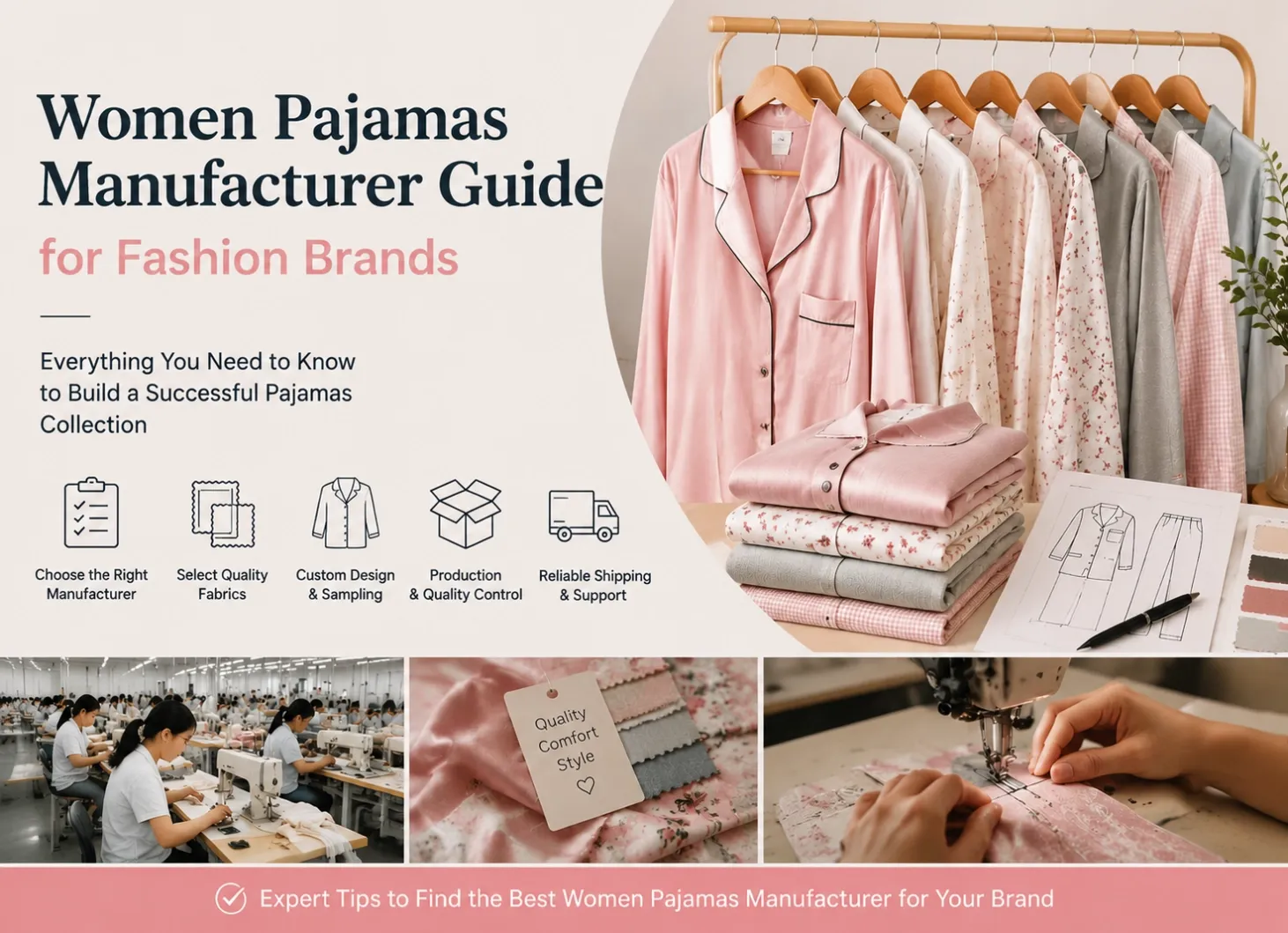
A women pajamas manufacturer should be evaluated on the ability to turn a defined fashion brief into a controlled sample and bulk-order process. For brands, boutiques, wholesalers, Amazon sellers, importers, distributors, and hotel or spa buyers, the useful question is whether the supplier can clarify fabric, fit, branding, quality checks, and packing for the actual program. This guide helps B2B buyers compare suppliers without treating generic capability claims as order-specific proof.
Quick Answer for Buyers
• Send every supplier the same dated brief so quotes and replies can be compared fairly.
• Ask each women pajamas manufacturer to distinguish confirmed details from items requiring material selection, sampling, or order-specific approval.
• Compare sample control, documentation, inspection discussion, and response clarity before comparing price.
• Request current, permissioned evidence relevant to your program, such as product references, material options, sample records, inspection scope, and packing examples.
• Send an organized brief through Xinglaika Apparel's contact page (https://www.xinglaikaapparel.com/contact-us) to begin a focused supplier discussion.
Define the Buying Job Before Requesting Quotes
"Women pajamas" can mean different procurement tasks. A fashion brand may be developing a seasonal collection with a new silhouette, print, or fabric direction. A boutique may need a limited private-label assortment. A wholesaler may prioritize repeatable sizing and carton packing. An Amazon seller may need to align variation planning, care information, labels, and marketplace-ready packing. A hotel or spa buyer may start with intended use, hand feel, laundering expectations, and presentation.
Write the decision in one sentence before contacting suppliers. For example: "Select a supplier that can develop our womens woven pajama set from the attached reference and document sample, label, and packing approvals." That statement makes an inquiry measurable. It also reveals whether a supplier understands the buyer task instead of responding with a generic price.
Use the Xinglaika Apparel product collection (https://www.xinglaikaapparel.com/products) to establish shared product vocabulary. Product pages can help describe a neckline, sleeve, piping, pocket, print, or set configuration. They do not confirm that a particular fabric, decoration, or customization is available for every order; those points require project-level confirmation.
Build a Comparable Women Pajamas Brief
A comparable quotation needs a comparable brief. Do not assume a reference image, fabric name, or packing request will be interpreted identically by every supplier. Mark each item as fixed, preferred, or open for recommendation.
Buyer checklist
• End use and target market: Affects sizing, care, labeling, and presentation. Sales channel, target market, intended wearer, and price position
• Design reference: Defines the visible product. Tech pack, sketches, photos, or marked reference images
• Fabric direction: Changes hand feel, drape, care, and commercial scope. Fiber preference, finish, weight target, and required test standard if applicable
• Construction: Avoids assumptions about top and bottom details. Collar, placket, pockets, elastic, cuffs, seams, and measurements
• Size range and fit: Makes sample review actionable. Base size, grade expectations, size chart, and fit priorities
• Branding: Sets artwork and trim inputs. Label copy, logo artwork, care information, hangtag, and barcode needs
• Packaging: Defines the finished delivery unit. Folding, bags, inserts, carton marks, and retailer requirements
• Quantity and timing: Frames the production discussion. Estimated quantity, desired launch window, and reorder outlook
If fabric or construction is undecided, say so. Ask for practical alternatives and identify the trade-off that matters most: softness, opacity, durability, price position, or presentation. This yields a better sourcing discussion than asking suppliers to guess the missing requirements.
Evaluate Evidence and Sample Control
Supplier evaluation should test information needed for the current program. A gallery, an unverified certificate image, a customer logo, or a broad capacity statement does not prove that the exact brief can be delivered. Ask instead for evidence that is relevant, current, permissioned, and safe to share.
Buyer checklist
• Product development: Required inputs, sample sequence, and how comments are consolidated. Whether the reference can become a usable specification
• Material and trims: Options matching the stated fabric direction and visible details. Whether the intended feel and appearance can be evaluated
• Fit and sizing: How base measurements, grading, and sample feedback are recorded. Whether size approval can be controlled
• Quality inspection: Which agreed checks can cover fabric, sewing, measurements, labels, and packing. Whether acceptance criteria can be documented
• Branding execution: Artwork files and approval points for labels and packing. Whether brand elements can be introduced without ambiguity
• Communication: Named owner for revisions and current-specification control. Whether handoffs will remain traceable
The supplier's questions are evidence too. A useful reply identifies missing inputs, says where a sample is required, and separates a proposal from a confirmed requirement. A vague promise should lead to more clarification, not to skipping the sample stage.
The About Xinglaika Apparel page (https://www.xinglaikaapparel.com/about-us) provides company context. Pair it with your own brief, evidence requests, and order-specific confirmation. Keep approved sample, measurement, artwork, and packaging files together so both teams use the current reference.
Manufacturing Process With Xinglaika Apparel
Xinglaika Apparel presents an OEM and ODM sleepwear workflow for global B2B buyers. Confirm scope and acceptance criteria for the actual women pajamas order in writing; a process description does not replace an approved specification.
- Fabric selection. Align on fabric direction, hand feel, appearance, care needs, and feasible options. Record approved material information in the sample and production specification.
- Pattern development. Develop or adjust the pattern from the approved brief, including silhouette, base size, neck, sleeve, waistband, and construction points. Identify fit-critical details early.
- Sample making. Review the sample against written expectations for fit, appearance, sewing, trims, print or embroidery placement, labels, and measurements. Consolidate comments into one revision record.
- Quality inspection. Agree checks relevant to the order, including material appearance, stitching, measurements, trims, labels, folding, and packing. The buyer should define channel-relevant acceptance criteria.
- Bulk production. Begin bulk work only after product, material, measurements, branding, and packaging approvals are aligned. Keep one current specification for change control.
- Packaging. Confirm folding, bags, inserts, barcode placement, carton marks, and market-specific requirements before final packing.
Compare Scope Before Choosing a Supplier
Price is meaningful only when scope is comparable. One quote can assume a different fabric, size range, branding item, or packing method. Use this decision matrix before choosing a supplier.
Buyer checklist
• Sample scope: What is represented and how comments are approved. Bulk work follows an unapproved interpretation
• Measurement control: Base size, tolerance approach, and fit feedback record. Teams use different size references
• Material approval: Fabric and trim details attached to the order record. Appearance or care expectations shift
• Inspection checkpoints: Agreed attributes and how findings are handled. Buyer expectations are not measurable
• Brand and label files: Artwork version, copy, placement, and approval status. Outdated brand information is used
• Packaging specification: Unit packing, inserts, barcodes, and carton details. Goods are unsuitable for the intended channel
Ask suppliers to flag every incomplete line. This produces a decision-oriented manufacturing conversation rather than unsupported promises about capacity, certification, delivery, or customer history.
Product, Private Label, and Packaging Choices
Women pajamas development often involves a sequence of choices rather than one decision. A brand may have a silhouette and color direction but need to review fabric hand feel, piping, button type, elastic construction, print placement, or label treatment. A wholesaler may focus on a size and pack matrix. An Amazon seller may map variations and packaging to a listing plan. A hospitality buyer may begin with use and laundering considerations.
Contact Xinglaika Apparel on WhatsApp or submit the contact form for a structured product conversation. For brand-launch planning, read How to Start a Private Label Pajama Brand (https://www.xinglaikaapparel.com/posts/how-to-start-a-private-label-pajama-brand). For broader sourcing context, read How Fashion Brands Source Sleepwear From China (https://www.xinglaikaapparel.com/posts/how-fashion-brands-source-sleepwear-from-china). These resources support a brief; they do not replace a sample or project-specific confirmation.
Why Choose Xinglaika Apparel
Xinglaika Apparel positions itself as a China OEM and ODM sleepwear and apparel manufacturer for global brands, boutiques, wholesalers, Amazon sellers, importers, and distributors. Its stated capabilities include 20+ years of experience, 100+ skilled workers, OEM and ODM service, flexible MOQ, custom labels, custom packaging, and worldwide export.
Treat these as starting points for your supplier conversation. Ask how each point applies to your design, quantity, target market, fabric, size range, and packaging. A careful buyer still requests order-specific confirmation and keeps approved documentation rather than assuming a general statement covers every project.
FAQ
What should a fashion brand send to a women pajamas manufacturer first?
Send a tech pack or marked references, target quantity, target market, sales channel, fabric direction, size range, branding files if available, and packaging needs. State which choices need supplier options or samples.
How can I compare women pajamas suppliers fairly?
Give every supplier the same dated brief. Compare response clarity, sample process, material options, quality-control discussion, documentation, communication, and the scope behind the quote. Do not compare price alone when assumptions differ.
What evidence should I request from a women pajamas supplier?
Request project-relevant, permissioned information such as product references, sample workflow details, material options, inspection checkpoints, and packing examples. Use it to clarify the current order, not to infer unsupported claims about every product or customer.
Can private-label women pajamas include custom labels and packaging?
Discuss label copy, logo artwork, care information, hangtags, barcodes, folding, bags, inserts, and carton marks during the brief stage. Requirements and availability must be confirmed for the specific program.
Which quality checks should be written into the order plan?
Agree relevant checks for fabric appearance, sewing, measurements, trims, print or embroidery placement, labels, folding, and packing. Define acceptance criteria before bulk production.
Is a product page enough to confirm women pajamas can be made?
No. A product page can support a style discussion, but material, construction, customization, quantity, sample scope, and commercial terms must be confirmed for the actual project.
Request a Qualified Women Pajamas Quote
Looking for a women pajamas manufacturer for an OEM, ODM, private-label, wholesale, marketplace, or hospitality program? Contact Xinglaika Apparel (https://www.xinglaikaapparel.com/contact-us) with your design or references, quantity, target market, fabric preference, size range, label requirements, and packaging requirements. Identify which points need sample options or confirmation so the inquiry can lead to a practical next step.