Aug 10, 2026Buying Guides
Private Label Sleepwear Sourcing Trends for France Buyers
A buyer guide to private label sleepwear sourcing for France: compare fabrics, samples, MOQ, labels, packaging, QC, and supplier questions.
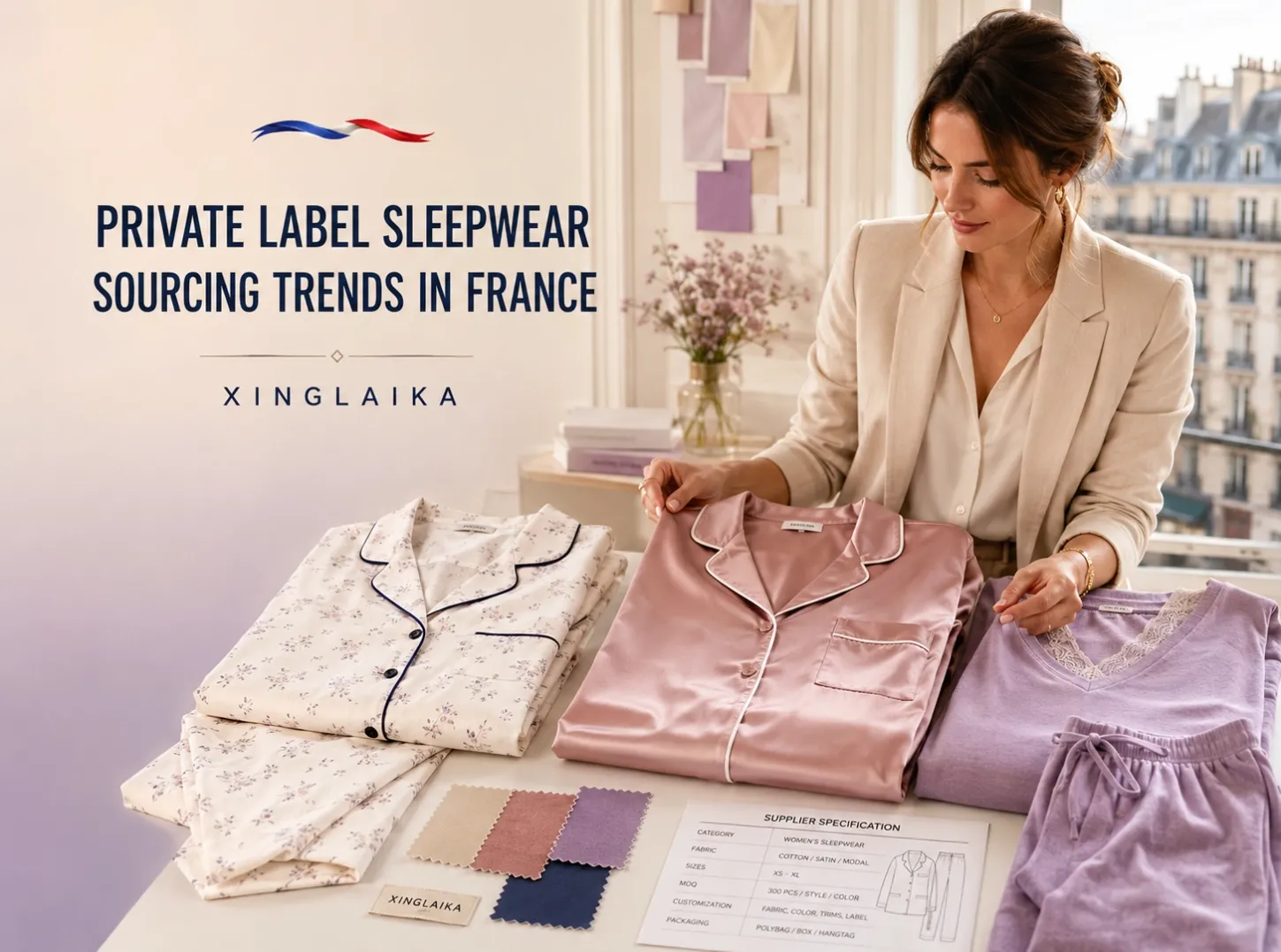
Private label sleepwear sourcing for France works best when buyers turn a collection concept into a supplier-ready brief before comparing prices. For French brands, boutiques, importers, wholesalers, Amazon sellers, and distributors, the practical decision is not simply where to buy pajamas: it is how to control fabric, fit, branding, packaging, and inspection across a repeatable order process. This guide explains the 2026 sourcing priorities and the questions that help buyers qualify an OEM/ODM partner without relying on unverified claims.
Quick Answer for Buyers
- Start with a written collection brief: target customer, sales channel, silhouettes, fabric direction, size range, label artwork, and target order quantity.
- Ask each supplier to quote the same specification, sample route, quality standard, and packing assumptions; otherwise price comparisons are misleading.
- Approve fabric and colour references before the final pre-production sample, especially for satin, modal blends, cotton jersey, and printed sets.
- Treat MOQ as a negotiated project variable tied to fabric, colour, trim, and packaging—not as a number to compare in isolation.
- Build an inspection checklist and a packaging sign-off into the purchase order before bulk production starts.
Private Label Sleepwear Sourcing France: Why a Detailed Brief Matters
French private-label buyers often need a sleepwear range that feels coherent across ecommerce, boutique, wholesale, or marketplace channels while allowing different price points and seasonal drops. The opportunity is to reduce avoidable revisions: define the product promise and operating requirements early, then let a manufacturer respond to an actionable brief.
For example, a buyer may need satin pajama sets for gifting, breathable cotton styles for everyday collections, or robes paired with hotel and spa programs. Those are distinct procurement tasks. A useful brief identifies which styles carry the range, what must remain consistent between colours, and what can change by channel. It also avoids consumer-lifestyle language that does not help a supplier quote, sample, or inspect the goods.
Use the Xinglaika Apparel product overview to frame product families, then align the sourcing conversation with your launch calendar and purchase order. If you are creating a new label, the private label pajama brand guide can help structure the first supplier brief.
Buyer Decision Matrix: What to Specify Before Requesting Quotes
Decision area | Why it matters for France sourcing | What buyers should ask |
|---|---|---|
Product range | Keeps the quotation tied to a commercial assortment. | Which styles, colours, and size runs are in the first order? |
Fabric and trims | Changes hand-feel, cost, care instructions, and sampling time. | Can you send composition, weight, colour, and trim options for approval? |
Fit and grading | Prevents a sample from becoming the only fit reference. | What measurement chart, tolerance, and grading rules will be used? |
MOQ | Depends on material, colour, printing, and packaging choices. | What MOQ applies per style, colour, fabric, and custom component? |
Branding | Labels and hangtags need artwork and placement approval. | Which label files, placement diagrams, and approvals are required? |
Packing | Affects retail readiness and carton planning. | What are the unit pack, carton dimensions, carton marks, and packing assumptions? |
Quality control | Gives the order a shared acceptance standard. | Which checkpoints can be reviewed against the approved sample and specification? |
This matrix creates an apples-to-apples sourcing request. It also gives the buyer a way to distinguish a generic quote from a quote that actually reflects the intended private-label product.
Trend One: Range Planning Around Commercial Channels
Rather than treating one pajama set as a complete collection, buyers can plan a small architecture: entry styles, signature materials, robe or loungewear add-ons, and a controlled colour story. A boutique may prioritize tactile presentation and low-risk replenishment choices. A distributor may require clearer SKU and carton discipline. An Amazon seller should plan branding, packaging, variation structure, and inspection requirements before committing to artwork.
The right starting point is the buyer’s sales channel and target market, not a supplier’s catalogue alone. Contact Xinglaika Apparel on WhatsApp or submit the contact form to identify discussions worth having, then submit a request based on your own target assortment. A supplier should confirm what is feasible for the particular order rather than guarantee an unreviewed design.
Trend Two: Material Decisions Need Testable References
Fabric selection is a sourcing decision, not merely a visual one. Buyers should identify the desired composition, weight or feel target where applicable, colour reference, print method if relevant, and care-label expectations. A swatch, lab dip, sample, or approved reference can make the brief more reliable than adjectives such as “premium” or “luxury.”
For satin-look products, clarify fibre content, sheen, drape, opacity, and any contrast piping or lace. For jersey or cotton styles, clarify softness, recovery, shrinkage expectations, and print or embroidery placement. Ask how the supplier will record those choices in the sample approval and bulk-production specification. Do not assume a fabric name proves a specific performance result; request order-specific confirmation and applicable documentation where needed.
Trend Three: Sampling Is the Buyer’s Control Gate
Sampling should resolve fit, workmanship, labelling, packaging, and cost-driving construction questions before bulk production. A buyer can make this process easier by supplying a tech pack or reference garment, a measurement chart, artwork files, a colour target, and a clear list of non-negotiables.
At sample review, inspect silhouette, seams, elastic or piping, print placement, size grading, label position, and the proposed retail presentation. Record each change in one consolidated approval document. Fragmented feedback across email, chat, and image annotations is a frequent source of production ambiguity. If a change affects cost, timing, or MOQ, request an updated written confirmation before proceeding.
Manufacturing Process with Xinglaika Apparel
The following process is a buyer-facing planning sequence. Exact timing, feasibility, and materials must be confirmed for each project.
- Fabric selection: Review the required composition, colour, hand-feel, trims, and approved references against the collection brief.
- Pattern development: Translate measurements, fit direction, and construction notes into a pattern and grading discussion.
- Sample making: Produce a sample route for buyer review; consolidate corrections to fit, workmanship, artwork, and branding.
- Quality inspection: Agree inspection points that compare bulk goods with the approved specification and sample.
- Bulk production: Release bulk work only after key approvals, materials, packaging, and order details are aligned.
- Packaging: Confirm label, hangtag, polybag or other unit-pack choices, carton marks, and shipping-facing packing requirements.
Trend Four: Branding and Packaging Belong in the First Quote
Private-label value often comes from the details buyers leave until late: neck labels, care labels, size labels, hangtags, barcode placement, inserts, gift boxes, polybags, and carton marks. These components influence MOQ, lead time, packing volume, and approval steps. Include them in the first request even if the artwork is still preliminary.
French buyers should prepare brand files in a usable format and identify any required language, care, fibre-content, or market-label review. A manufacturer can explain the information needed for production, but the importer or brand should validate its own market, legal, and marketplace obligations. This prevents a supplier conversation from being mistaken for compliance advice.
Why Choose Xinglaika Apparel
Xinglaika Apparel presents itself as a China OEM and ODM sleepwear and apparel manufacturer for global brands, boutiques, wholesalers, Amazon sellers, importers, and distributors. Its stated service profile includes 20+ years of experience, 100+ skilled workers, OEM and ODM service, flexible MOQ, custom labels, custom packaging, and worldwide export.
Those points are a reason to start a project conversation—not a substitute for buyer due diligence. Ask the team to confirm the capabilities, materials, sampling route, MOQ, production schedule, and quality controls that apply to your specific collection. Review the About Xinglaika Apparel page alongside your brief, then use the contact page to document project-specific questions.
Supplier Questions France Buyers Can Reuse
Before selecting a partner, send the same questions to every shortlisted supplier:
- Which part of this brief needs clarification before you can quote accurately?
- What MOQ applies by style, colour, fabric, trim, and custom packaging element?
- Which sample stages do you recommend, and what approval record will control bulk production?
- How will you confirm measurements, tolerances, label placement, and packing instructions?
- What information do you need from us to quote freight-facing cartons and product presentation?
- Which order-specific capabilities or documents should we verify before issuing a purchase order?
These questions keep the evaluation factual. They also surface whether the supplier is responding to the actual private-label project or only offering a standard catalogue item.
FAQ
What should a France buyer include in a private label sleepwear RFQ?
Include styles, reference images or tech packs, fabric direction, colours, size range, quantities, target market, required labels, packaging, desired sample route, and delivery context. Ask the supplier to identify missing information before pricing.
How should buyers compare MOQ between sleepwear suppliers?
Compare MOQ at the same level of detail: style, colour, fabric, print, trim, labels, and packaging. A lower headline MOQ may not cover the same custom elements or sample process.
Can a supplier help develop a new sleepwear design?
An OEM/ODM discussion can help turn a buyer brief into a manufacturable sample plan. Provide clear references and confirm ownership, design approvals, feasibility, and changes in writing for your project.
When should labels and packaging be finalized?
Start them during quotation and sampling, then approve final artwork and placement before bulk release. Late packaging decisions can affect cost, lead time, carton planning, and retail readiness.
What quality controls should be agreed for private label pajamas?
Agree measurable checkpoints for fabric, measurements, workmanship, artwork or print placement, labels, packing, and any project-specific requirements. Tie them to the approved sample and written specification.
Does this guide provide France compliance advice?
No. It is a B2B sourcing guide. Brands and importers should validate their own product, labelling, consumer-safety, customs, marketplace, and legal requirements with appropriate qualified advisers and current official sources.
Request a Custom Quote
Planning a French private-label sleepwear range? Contact Xinglaika Apparel with your design or reference images, target quantity, target market, fabric preference, size range, label artwork, and packaging requirements. Include your preferred sample route and launch window so the team can identify the project details that need confirmation before quotation.