Aug 11, 2026Buying Guides
How to Plan MOQ and Sampling Before Ordering Custom Satin Pajamas
Plan MOQ and sampling with a custom satin pajamas supplier using a practical B2B brief, approval checklist, quality controls, and packing plan.
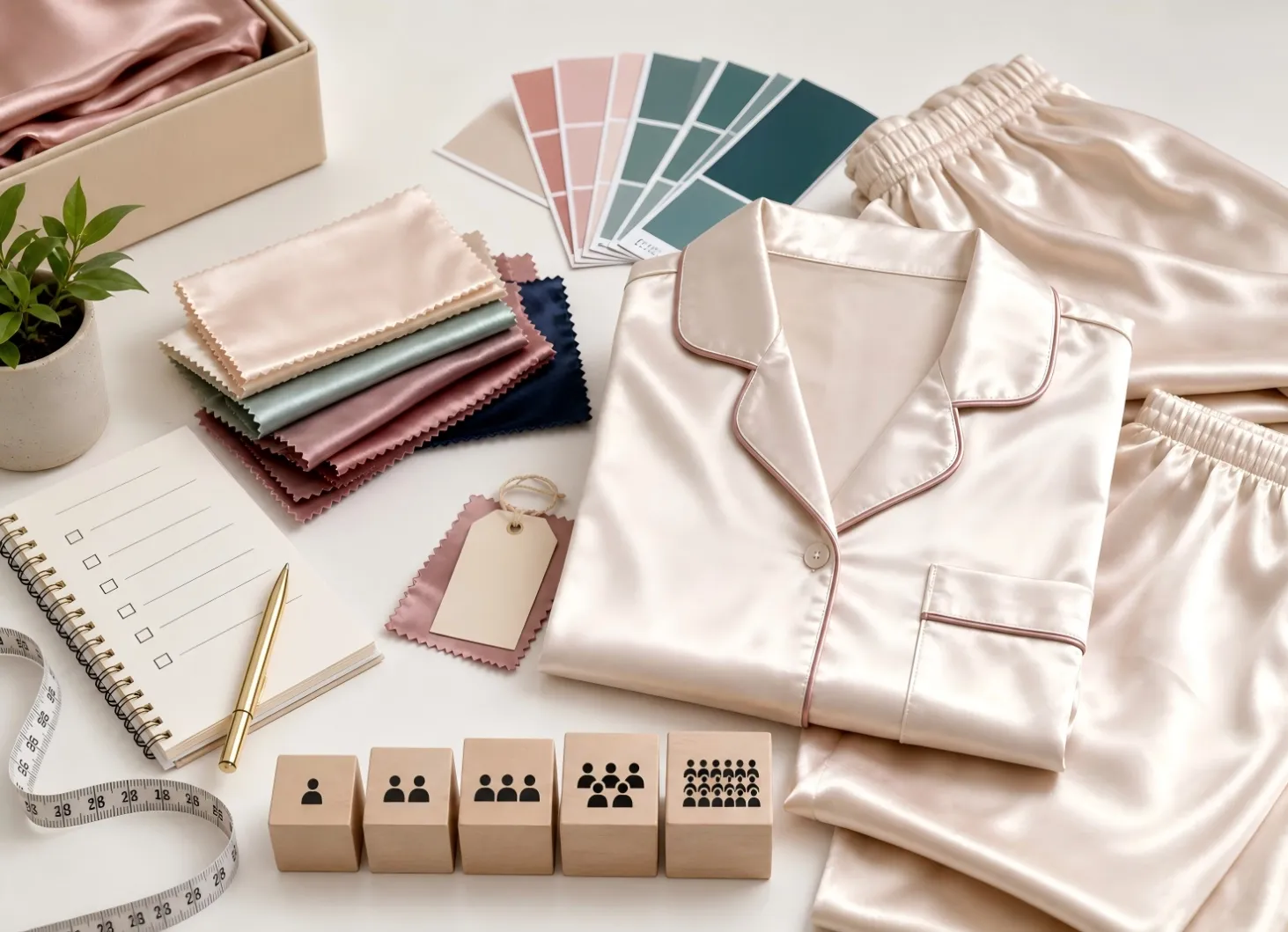
When choosing a custom satin pajamas supplier, plan MOQ and sampling as one controlled buying task: define the product variants, approve a sample, and compare quotations that use the same scope. This is especially important for distributors, brands, boutiques, wholesalers, Amazon sellers, and importers because every colour, size, trim, logo, and packing decision can change the order structure. The goal is not to chase a generic minimum; it is to build an order brief a supplier can confirm for your exact satin pajama program.
Quick Answer for Buyers
- Start with one version-controlled brief covering style, fabric direction, colours, sizes, quantity by variant, branding, labels, packing, target market, and required sample stages.
- Ask each candidate to explain how the requested mix affects its project-specific MOQ, sample route, material preparation, and quotation assumptions.
- Approve bulk production only after the final sample, measurement chart, fabric and trim references, artwork, labels, packing, and inspection checkpoints refer to the same version.
- Treat destination-market labeling, product, import, marketplace, and test requirements as buyer verification tasks with qualified parties; a supplier quote does not replace that review.
Turn a Satin Pajama Idea into a Quote-Ready Brief
A satin pajama reference image is a starting point, not a manufacturing specification. Before requesting pricing, record the set configuration: top and bottom shape, collar, sleeve length, pocket, piping, buttons, waistband, cuffs, seams, and any contrast panels. Then identify the fabric direction, composition requirement if known, colour reference, print or solid colour, hand-feel expectation, size range, logo treatment, labels, hangtags, individual protection, carton plan, and target market.
Quantities should be stated by style, colour, and size rather than as one total. A distributor ordering 600 sets in six colours and seven sizes faces a different planning question from a brand ordering 600 sets in two colours and three sizes. Give every potential supplier the same controlled sheet. The Xinglaika Apparel home page and product range can help frame the conversation, but your written order brief should control the quotation.
Plan MOQ by Variant, Not by a Single Number
MOQ is often discussed too early as a standalone number. For custom satin pajamas, the relevant question is how a proposed variant mix affects materials, colours, trims, cutting, embroidery or printing, labels, packing, and production handling. Ask the supplier to separate what is project-specific from what is an assumption. This makes low quotes comparable and helps a buyer decide whether to simplify colours, sizes, fabric options, or branding before sampling.
Planning factor | Why it changes the MOQ discussion | What the buyer should ask |
|---|---|---|
Style construction | Collar, piping, pockets, and set components affect work content | Which details must be fixed before an order-specific MOQ can be reviewed? |
Fabric and colour | Material references and colour choices may change preparation needs | What fabric reference and colour standard will be used for sampling and bulk discussion? |
Size and colour mix | Many small variants can complicate allocation | Can you show quantities by size and colour and identify the mix assumptions? |
Branding and trims | Labels, buttons, piping, and artwork need controlled versions | Which branding files, trim references, and approvals are needed before confirmation? |
Packaging | Inserts, bags, bands, and carton marks add scope | What individual pack and carton assumptions are included or excluded? |
Sample route | Revisions may require more than one approval point | What sample stages, comments log, and approval owner will be used? |
Avoid treating a flexible MOQ statement as a guarantee. Instead, ask for a written response to the final brief. If you are still testing demand, identify a simplified launch assortment and the information you need to revisit the mix after sampling. The pajama product direction can be useful for discussing silhouettes, while the approved specification governs the order.
Build a Sampling Route That Produces a Decision
Sampling should answer defined questions, not merely produce a photogenic prototype. Decide what you need to review: fabric appearance and hand feel, colour direction, fit, measurements, construction, piping, button attachment, waistband, logo placement, label wording, care information, individual packing, and carton markings. Name one buyer-side approval owner and use dated, versioned comments so the supplier is not working from several conflicting email threads.
For a private-label launch, a practical route may include a pre-production discussion, a sample review, a measured revision where needed, and a final bulk-release confirmation. The exact route, cost, timing, and whether a new sample is needed after a change are order-specific matters to confirm with the supplier. The important control is that changes to fabric, fit, print, piping, logo, labels, or packaging are recorded against the version being approved.
Use a sample approval sheet with clear outcomes: approved, approved with listed corrections, or not approved. Attach the final size chart, colour reference, artwork files, label text, packing instructions, and inspection points. A visual approval alone is weak if it does not state what will be measured or checked when bulk production begins.
Manufacturing Process With Xinglaika Apparel
Use this six-stage sequence to discuss project controls with Xinglaika Apparel. It describes checkpoints to confirm for your order, not a promise of unverified capacity, lead time, certification, or outcome.
- Fabric selection: align the satin reference, composition direction, colour, surface appearance, and care expectations with the approved brief.
- Pattern development: convert the top, bottom, collar, sleeve, waistband, pocket, piping, and size-chart requirements into controlled specifications.
- Sample making: review the sample against fabric and trim references, measurements, artwork, labels, and a dated comments log.
- Quality inspection: agree order-specific checkpoints for sewing, measurements, appearance, logo placement, labels, and packing before bulk release.
- Bulk production: maintain approved versions and raise any material, construction, or packing question before it becomes an uncontrolled change.
- Packaging: confirm individual protection, inserts, carton assortment, shipping marks, and receiving requirements against the final packing plan.
Compare Supplier Responses on Scope, Not Just Price
Send the same brief to each candidate and ask each supplier to restate it in writing. A useful response identifies the style, fabric direction, colours, size range, quantity mix, branding, sample requirements, packing, and any information still needed. Compare whether the quotation includes or excludes samples, materials, trims, labels, logo application, individual packing, cartons, documentation requests, inspection support, and shipping terms.
The supplier comparison guide provides a broader comparison method. For private-label planning, also review how to start a private label pajama brand. Use those links to organize internal questions, then make the final decision from order-specific documentation, approved samples, and your own due diligence.
Quality, Labels, and Packing Before Bulk Release
Satin sleepwear can show handling, sewing, shade, and finishing differences clearly, so an order-specific inspection plan is more useful than a generic quality statement. Agree which checkpoints matter for the program: measurements and tolerances, stitch appearance, loose threads, seams, piping alignment, button attachment, waistband construction, logo placement, fabric appearance, label content, individual protection, carton quantities, and shipping marks. Decide who reviews the evidence and how deviations are reported.
Labels and packing belong in the same approval system. Provide accurate artwork and text; note label positions, care-label requirements, hangtags, bags or bands, inserts, carton marks, and size or colour identification. Importers and marketplace sellers should independently check destination and channel requirements with the appropriate qualified parties. A supplier can clarify its project process, but buyers should not assume a generic label or packing example satisfies every market.
Why Choose Xinglaika Apparel
Xinglaika Apparel is a China OEM and ODM sleepwear and apparel manufacturer for global brands, boutiques, wholesalers, Amazon sellers, importers, distributors, and hotel or spa buyers. For custom satin pajamas, use the following existing-site capability points as a discussion framework and confirm their project-specific application in writing.
- 20+ years experience
- 100+ skilled workers
- OEM & ODM service
- Flexible MOQ
- Custom label
- Custom packaging
- Worldwide export
Review the About Xinglaika Apparel page alongside your own supplier diligence. Ask for order-specific confirmation of materials, samples, production arrangements, quality checks, and relevant documentation; these capability points do not replace buyer verification.
FAQ
What should I send a custom satin pajamas supplier before asking about MOQ?
Send the style reference, construction details, fabric direction, colours, size range, quantity by variant, logo and label requirements, packing needs, target market, and expected sample route. This allows the supplier to identify what must be clarified before it can assess your exact program.
Is one total quantity enough to plan a satin pajama MOQ?
Usually not. Quantities by style, colour, and size help the supplier explain the assumptions behind an order-specific MOQ. A total can hide a complex variant mix that needs further discussion.
What should be approved on a satin pajama sample?
Review fabric appearance, colour direction, fit, measurements, construction, piping, buttons, waistband, logo placement, labels, and the packing concept. Record comments against a dated version and identify what changes require another approval.
How can a distributor compare custom satin pajama quotations fairly?
Give every supplier the same written brief and compare the same scope: sample work, fabric, trims, branding, labels, individual packing, cartons, inspection expectations, documentation requests, and delivery terms. Resolve exclusions before comparing price.
Can I use custom labels and packaging for satin pajamas?
They should be planned as part of the project brief. Provide label text, artwork, placement, hangtag or insert needs, individual protection, carton marks, and the buyer-side approval route so the supplier can review the exact scope.
When should bulk production be approved?
Approve bulk only after the final sample, measurement chart, fabric and trim references, artwork, labels, packing plan, inspection checkpoints, and any approved revisions point to the same product version.
Request a Custom Satin Pajama Quote
Looking for a custom satin pajamas supplier for an OEM or private-label program? Contact Xinglaika Apparel with your design, quantity by variant, target market, fabric preference, size range, branding files, and packaging requirements. We can use your brief to clarify the sample and quotation steps for your order.