Aug 6, 2026Buying Guides
How Germany Buyers Source Nightdress From China: B2B Guide
Compare a Germany nightdress supplier in China with a buyer-led brief, sample, quality, packaging, and order-control process for B2B sourcing.
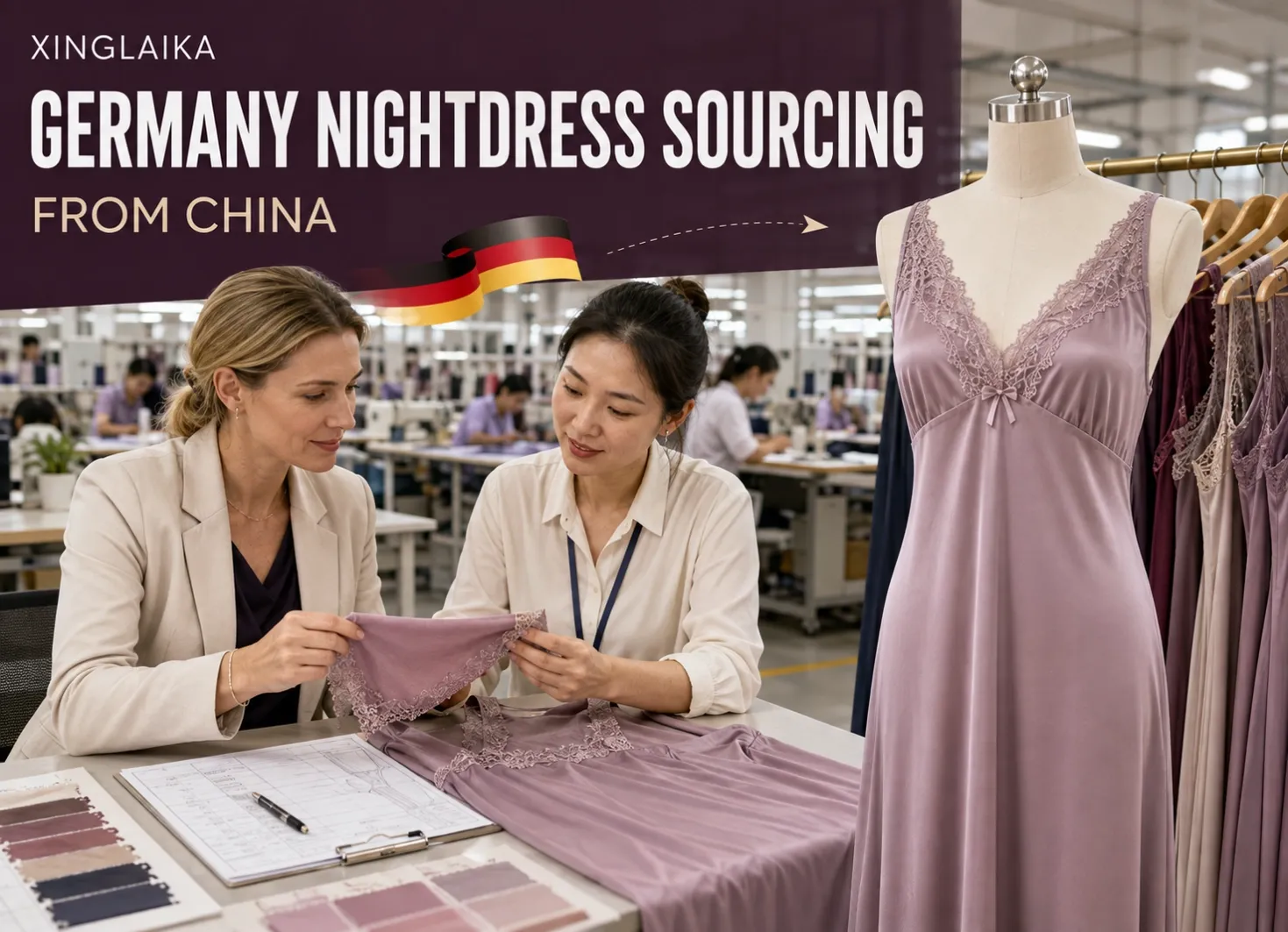
How Germany Buyers Source Nightdress From China: A B2B Guide
German wholesalers, fashion brands, boutiques, importers, and marketplace sellers can source nightdresses from China more safely by turning a product idea into a comparable supplier brief before requesting prices. A suitable Germany nightdress supplier should be evaluated on sample clarity, construction control, labeling and packaging readiness, communication, and the buyer's own verification plan—not on a catalogue image alone. This guide helps B2B buyers decide what to specify, what to compare, and what to approve before a bulk order.
Quick Answer for Buyers
- Start with one written brief: target customer, silhouette, fabric, sizing, trims, label language, packaging, target quantity, and required delivery window.
- Ask each potential supplier to quote the same specification and state what is included, excluded, assumed, or still subject to sample approval.
- Use a pre-production sample and a signed approval record to control fit, fabric, construction, branding, and packing before bulk production.
- Treat Germany-specific labeling, product safety, packaging, and import obligations as items to validate with qualified local advisors; do not assume a supplier's general statement is a legal conclusion.
- Keep an inspection and shipment handoff plan in the purchase order, including tolerances, defect handling, carton marks, documents, and escalation contacts.
The Procurement Task: Make Quotes Comparable
The primary task is not simply finding a low price for a nightdress. It is selecting a supplier whose sample and production process can reproduce the product your channel needs. A German boutique may need a small, coherent seasonal range; a wholesaler may need repeatable size assortments and carton logic; an Amazon seller may need product presentation and traceable approval records. These are different briefs, even when the product photo looks similar.
Use the Xinglaika Apparel home page to understand the company's sleepwear focus, then review nightdress product options and the broader product range. Do not request a final quote until the desired construction and commercial assumptions are written down.
Brief element | Why it matters | Buyer question |
|---|---|---|
Target customer and channel | Determines style, price point, sizing, and presentation | Is this for boutiques, wholesale, marketplace, or a brand collection? |
Fabric and trim | Changes hand feel, cost, care needs, and repeatability | What composition, weight, lace, elastic, or piping is acceptable? |
Fit and grading | Reduces returns and sample rework | Which measurements, tolerances, and size standard govern approval? |
Branding | Controls label, hangtag, and pack artwork | Which files and languages must be supplied and approved? |
Quantity and assortment | Drives MOQ, material booking, and carton planning | What is the quantity by colour and size? |
Verification | Prevents assumptions at bulk handoff | Who approves the sample, inspection criteria, and shipment documents? |
Build a Nightdress Sourcing Brief Before Contacting Suppliers
A useful brief is detailed enough for comparable replies but does not pretend that every decision is fixed. Attach sketches, reference photos that you have permission to use, a measurement chart, colour references, fabric direction, trim details, and intended pack format. Mark open points clearly: for example, “lace to be proposed at sample stage” is more useful than silently leaving lace unspecified.
For each candidate, request a response organized around the same headings: capability fit, assumptions, sample route, cost drivers, MOQ by colour/style, lead-time dependencies, available customization, quality checkpoints, and packing options. This makes differences visible. If a supplier gives an attractive price but does not identify fabric composition, size range, labels, or packing assumptions, the quote is not ready for comparison.
Evaluate Sample Quality, Not Just the First Photo
Nightdress sourcing often fails when the approved visual reference is not converted into measurable construction details. During sample review, inspect the garment against the brief: neckline shape, strap or sleeve construction, seam finish, lace attachment, transparency, shrinkage risk, care-label information, measurement points, and fit across the agreed size range. Request clear sample photos or a physical sample when the order risk justifies it.
The Women Plush Nightdress OEM Manufacturer product page is an example of a product-page format to discuss with a supplier; it is not proof that any unquoted fabric, trim, capacity, or compliance requirement is automatically available for your project. Record sample changes in versioned comments. The final approved sample, measurement chart, material specification, and packaging instruction should form one controlled package for bulk release.
Manufacturing Process With Xinglaika Apparel
Xinglaika Apparel presents a structured OEM/ODM workflow for sleepwear projects. For a nightdress order, use the following six steps as a buyer-controlled discussion framework and confirm the project-specific details in writing.
- Fabric selection. Review composition, weight, colour, hand feel, and trim compatibility against the brief. Ask how the selected material will be identified and approved for the order.
- Pattern development. Convert the desired silhouette and measurement chart into a pattern and grading approach. Confirm the fit model, size range, and allowed tolerances.
- Sample making. Review the first sample for construction, fit, appearance, label placement, and pack concept. Log each revision before approving the production sample.
- Quality inspection. Agree inspection points such as measurements, sewing, stains, trim attachment, labelling, and packing condition. Define who receives findings and how rework is handled.
- Bulk production. Release bulk only after the approved specification package is complete. Ask for milestones and updates rather than relying on an assumed schedule.
- Packaging. Confirm folding, individual bags, inserts, hangtags, size stickers, carton marks, carton quantities, and destination-specific instructions before shipment.
Control Germany-Market Requirements Through Evidence
German buyers should distinguish product design decisions from legal, marketplace, and logistics requirements. The right question is not “Is this automatically compliant?” but “Which requirement applies to this product, what evidence is needed, and who is responsible for checking it?” Requirements may differ by product composition, sales channel, labeling, packaging, and importer role.
Create a responsibility list covering label text, fibre information, care information, warnings if applicable, packaging obligations, testing or documentation requested by your channel, and import paperwork. Ask a qualified Germany/EU advisor, customs specialist, marketplace policy resource, or testing provider for applicable requirements. Keep that external validation separate from supplier marketing claims. This protects both the buyer and supplier from treating a general conversation as a certification or legal promise.
Compare Suppliers With a Decision Matrix
Score each candidate using the same evidence, not a single overall impression. A lower quote can be appropriate only if the material, construction, sampling, inspection, and packing scope are equivalent.
Decision area | Evidence to request | Red flag |
|---|---|---|
Brief understanding | Written restatement of style, sizes, materials, branding, and quantity | Critical details are omitted or replaced with generic promises |
Sample control | Revision log, measurement points, and approval route | No clear sample version or approval owner |
Material control | Composition and approved swatch/sample reference | Material is described only by a vague trade name |
Quality process | Inspection checklist and rework escalation | “QC is strict” without checkpoints or records |
Packaging | Dielines, pack-out assumptions, and carton details | Labels or carton marks are left until shipment |
Communication | Named contacts, response cadence, and decision log | Price changes or questions are not documented |
Product, Brand, and Inquiry Paths
Use Xinglaika's About Us page to review the supplier's stated background and ask follow-up questions relevant to your order. The website states 20+ years of apparel experience, 100+ skilled workers, OEM & ODM service, flexible MOQ, custom labels, custom packaging, and worldwide export; buyers should verify the availability and fit of each capability for their style, quantity, timeline, and destination rather than treating these statements as an order guarantee.
For your product search, begin with the nightdress collection, compare adjacent sleepwear categories in the products section, and use the existing guide on choosing a reliable pajama manufacturer in China to structure supplier questions. When your brief is ready, use the contact page to submit the materials needed for a meaningful response.
Why Choose Xinglaika Apparel
Xinglaika Apparel positions itself as a China OEM and ODM sleepwear and apparel manufacturer for global brands, boutiques, wholesalers, Amazon sellers, importers, and distributors. Its website presents 20+ years of experience, 100+ skilled workers, OEM & ODM service, flexible MOQ, custom label options, custom packaging, and worldwide export. These are useful starting points for a buyer conversation, not substitute evidence for a specific order. Ask for the exact sample plan, manufacturing scope, quality checkpoints, and packaging options relevant to your nightdress brief.
FAQ
How should a German buyer request a nightdress quote from China?
Send a single brief with design references you may use, fabric direction, measurement chart, colours, size range, quantity by variant, branding files, packaging needs, target market, and desired delivery window. Ask the supplier to state assumptions and open items.
What should be approved before bulk production starts?
Approve the production sample, measurement chart, material and trim references, label text and placement, packaging instructions, inspection points, and any agreed shipment marks. Keep dated versions so the bulk team works from one source.
Can a supplier confirm Germany or EU compliance for my product?
Do not rely on a general website statement as a legal or certification conclusion. Identify the requirements for your product and channel, then obtain suitable advice or evidence from qualified parties while agreeing the supplier's document and sample responsibilities.
How can wholesalers reduce size-assortment risk?
Provide forecast quantities by size and colour early, request a measurement table with tolerances, review fit on the agreed size range, and confirm carton assortments before production. Changes after material booking can affect cost and timing.
What should Amazon sellers add to the sourcing brief?
Include the current marketplace listing requirements, intended imagery and pack presentation, barcode or label instructions, variation structure, returns-risk considerations, and documentation requests. Verify policies directly with the marketplace because they change.
Why is packaging discussed before bulk production?
Packaging affects artwork, labels, folding, outer cartons, handling, and shipment planning. Early approval avoids a finished garment waiting for unresolved inserts, carton marks, or destination instructions.
Request a Custom Quote
Looking for a Germany nightdress supplier for a B2B project? Contact Xinglaika Apparel with your design, target quantity, target market, fabric preference, size range, label and packaging requirements, and any inspection or documentation expectations. We can then clarify the sample route and the project-specific information needed for a responsible quotation.