Aug 6, 2026Buying Guides
From Design to Bulk Production: Custom Loungewear Development Process
Plan custom loungewear production from design brief and sampling to quality checks, bulk approval, and packing for a B2B order.
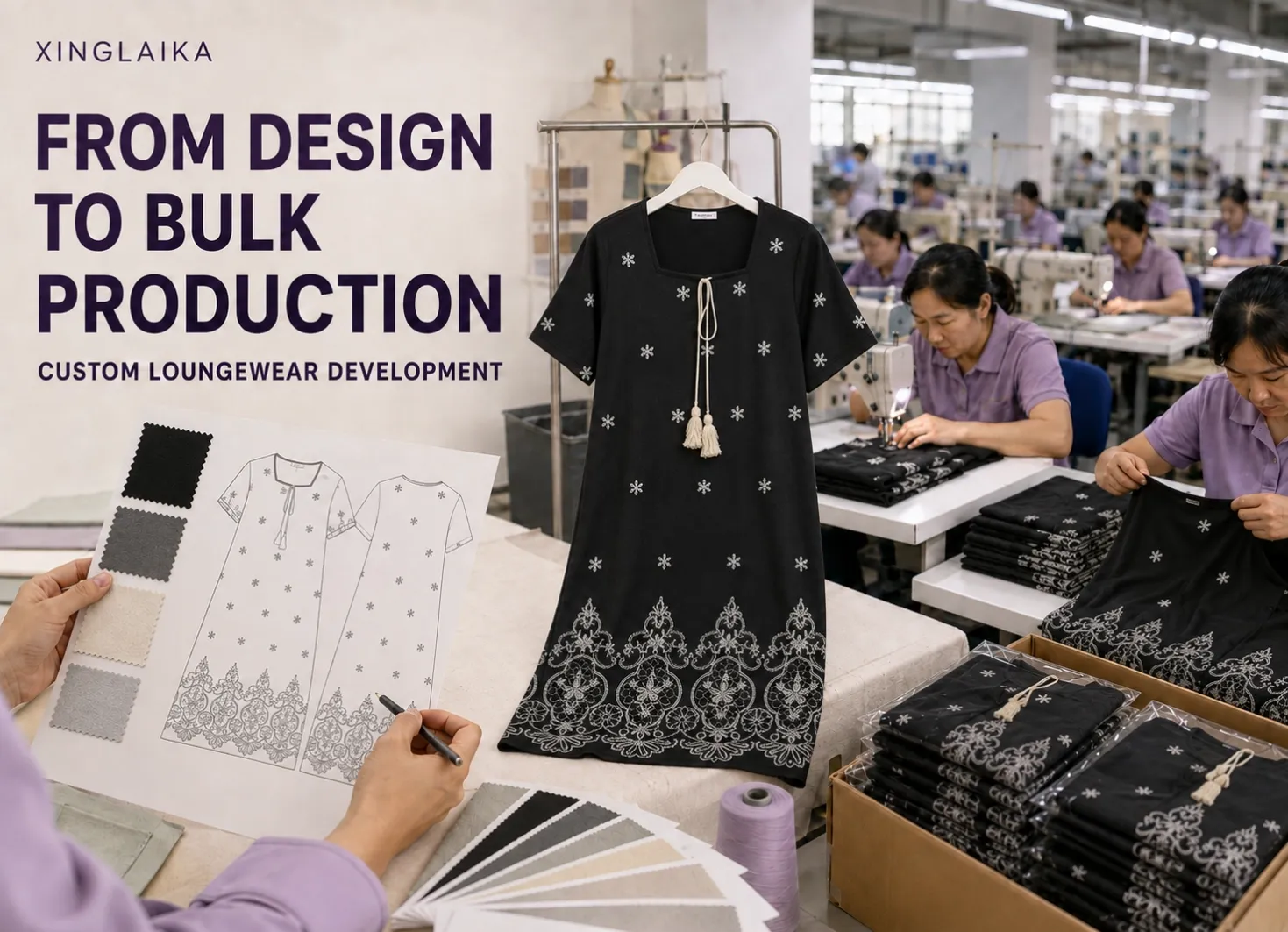
Custom loungewear production works best when a buyer turns a design idea into one controlled specification before bulk work begins. For wholesale buyers, fashion brands, boutiques, Amazon sellers, importers, distributors, and hotel or spa buyers, the practical decision is whether the design, materials, fit, branding, quality checkpoints, and packing can be approved in a sequence that suits the actual order.
This guide explains a B2B custom loungewear development process from initial brief to packed bulk goods. It is a planning framework, not a promise of order-specific capacity, certifications, timing, material availability, or regulatory compliance; confirm those points for the programme in writing.
Quick Answer for Buyers
- Begin with one dated brief covering the style, quantity range, target market, size range, fabric direction, branding, and packing.
- Use development and sample approvals to turn preferences into measurable specifications before authorizing bulk production.
- Compare proposals by included scope, material basis, change control, quality checkpoints, and packing—not unit price alone.
- Keep one current approval file for the buyer, designer, sourcing team, and production contact.
- Start a project discussion through Xinglaika Apparel's contact page with your references and open questions.
Start with a Production-Ready Loungewear Brief
An inspiration image is useful, but it is not yet a production brief. It may not show fibre content, fabric weight, stretch recovery, seam construction, pocket depth, measurement tolerances, label information, or how a set is folded for sale. Those missing decisions often become assumptions if they are not identified early.
Give every supplier the same version-controlled file. State what is fixed, what is preferred, and where you need options. A brand developing a seasonal loungewear set may prioritize silhouette and brand presentation; a wholesaler may need colour and size ratios; an Amazon seller may need the final selling unit and listing-ready labelling; a hotel or spa buyer may need use, laundering, and replenishment considerations. The Xinglaika Apparel product collection can help establish style vocabulary, but a product page does not confirm a custom programme's commercial or technical scope.
Brief item | Why it controls production | Buyer input to prepare |
|---|---|---|
Style reference | Defines the intended product | Tech pack, sketches, marked photos, and construction priorities |
Quantity and mix | Frames quote and planning discussion | Estimated quantity, colours, sizes, and reorder outlook |
Target market and channel | Affects the finished selling unit | Destination, retail or marketplace channel, and buyer requirements |
Fabric and trims | Affects hand feel, appearance, care, and cost | Fibre direction, fabric type, colours, trims, and approved alternatives |
Fit and grading | Makes sample feedback actionable | Base size, size chart, measurement points, and fit priorities |
Branding and packing | Defines what the customer receives | Labels, artwork, barcodes, folding, inserts, bags, and carton marks |
Align Fabric, Trims, and Construction Before Sampling
Material selection is not a separate decorative step. Fabric affects drape, opacity, shrinkage, care, print response, sewing behaviour, perceived value, and the final quote. Ask which material options are being discussed, what information is still needed, and which points can only be assessed through a sample. Keep fabric, elastic, drawcord, piping, buttons, zippers, labels, and print or embroidery notes in the same controlled brief.
When a buyer has a target market requirement, channel rule, testing need, or labelling obligation, identify it before approving materials and seek appropriate qualified advice where needed. Do not infer compliance from a fabric name, a generic document, a website statement, or a previous product. Use a written question list so the development discussion distinguishes confirmed specifications from options still under review.
Convert the Design into Patterns and a Sample Plan
Pattern development translates the intended silhouette into measurable panels, seam positions, and fit-critical dimensions. For loungewear, those details can include neckline shape, sleeve length, rise, inseam, waistband construction, elastic treatment, pocket placement, cuff finish, and set configuration. A clear base size and measurement chart prevent sample comments from becoming subjective or contradictory.
Agree what each sample stage must answer. A development sample may test construction and proportion; a fit sample may focus on measurements and wear; a pre-production approval may consolidate the chosen material, branding, labels, and packing direction. Name the current revision, collect buyer comments in one file, and record the approval or required change beside each point. Avoid authorizing bulk work from scattered chat messages or an unmarked photo.
Use a Controlled Manufacturing Process
Xinglaika Apparel presents OEM and ODM sleepwear and apparel support for B2B buyers. The following six-stage custom loungewear production sequence is a practical conversation framework. Confirm responsibilities, feasible timing, material choices, quantities, and acceptance criteria for the individual order rather than treating the sequence as a universal guarantee.
- Fabric selection. Review fabric direction, appearance, hand feel, care expectations, colours, and available options against the approved brief.
- Pattern development. Develop or adjust patterns from the approved reference and document fit-critical points, grading direction, and construction decisions.
- Sample making. Check the sample against the brief for fit, measurements, stitching, trims, artwork position, labels, and presentation.
- Quality inspection. Align order-relevant checks for material appearance, sewing, measurements, trims, labels, folding, and packing with the buyer's acceptance criteria.
- Bulk production. Release bulk work only after product, material, size, branding, and packaging versions are aligned in one current specification.
- Packaging. Confirm folding, bags, inserts, barcode placement, carton marks, assortment ratios, and destination or channel requirements before final packing.
Build Quality Checkpoints into the Approval Path
Quality is easier to manage when the buyer describes what acceptance means before production, not only after goods are ready. List the visible and measurable points that matter to the programme: approved material appearance, construction details, measurements, trim placement, print or embroidery position, label text, care information, folding, unit packing, and carton markings. If third-party inspection, testing, or destination-specific requirements are relevant, define the buyer's process and obtain the right advice rather than assuming a standard process covers it.
Ask how changes and findings will be recorded, who approves exceptions, and which version is current. The About Xinglaika Apparel page provides company context, while an order discussion should establish the actual quality plan. General statements about experience, workforce, export coverage, certificates, delivery, or capacity should be verified for the design and order instead of treated as evidence by themselves.
Why Choose Xinglaika Apparel
Include Xinglaika Apparel in a controlled supplier comparison when its loungewear direction and project discussion match your brief. Xinglaika describes 20+ years of experience, 100+ skilled workers, OEM and ODM service, flexible MOQ discussion, custom labels, custom packaging, and worldwide export. These are useful topics to test in a live inquiry, not substitutes for order-specific confirmation.
Use the home page, product collection, and company context to prepare questions. Ask how the proposed fabric, sample path, branding, quantity, packing, quality checkpoints, and destination needs apply to your programme. Select a supplier based on the written scope, sample result, communication quality, and commercial fit—not unverified general claims.
Plan Bulk Release, Labels, and Packaging Together
Bulk release should be a formal handoff, not a casual message after a sample looks close enough. Before release, compile the current style reference, size chart, approved material and trim direction, colour references, sample comments, artwork, label copy, placement instructions, folding method, unit pack, carton marks, and approvals. This gives the buyer and supplier one source for checking later questions.
Private-label loungewear packaging is part of the product experience and the logistics unit. Discuss hangtags, care labels, woven labels, size stickers, polybags or other unit packs, inserts, barcodes, folding boards, carton marks, and assortment ratios early. Kindly contact us for the product conversation. For service-scope decisions, see OEM vs ODM Sleepwear Manufacturing Explained; for launch planning, see How to Start a Private Label Pajama Brand.
Bulk-release question | Decision to record | Risk when unclear |
|---|---|---|
Which sample/version is approved? | Revision code, date, and approver | Bulk follows an outdated reference |
What material and trims apply? | Approved specification or defined alternatives | Quote, appearance, or care basis changes |
What is the size and assortment plan? | Size chart, grades, colours, and ratios | Incorrect selling mix or fit disputes |
What must be checked? | Buyer acceptance points and escalation owner | Quality discussions happen too late |
How is it packed and marked? | Unit pack, labels, carton marks, and channel rules | Finished goods do not match the selling or logistics unit |
Keep the Buyer in Control of Open Decisions
At the end of development, list what is approved, what remains open, who owns each decision, and what evidence is needed before bulk release. This can include material confirmation, fit comments, label copy, artwork, packaging, inspection process, or destination requirements. A good process makes uncertainty visible early enough for the buyer to decide whether to revise, sample again, request a different quotation, or proceed.
The aim is not to make every order identical. It is to make the chosen loungewear programme traceable from brief to finished pack. That protects the buyer's brand choices and gives each participant a shared basis for development and bulk production.
FAQ
What should a buyer provide for custom loungewear production?
Provide a dated brief with style references or a tech pack, estimated quantity and mix, target market and channel, fabric direction, size range and chart, construction priorities, branding files, labels, packing requirements, and target launch window. Mark fixed requirements separately from points where options are welcome.
When should fabric be approved in the loungewear development process?
Discuss fabric at the brief stage and confirm the material basis before the relevant sample or bulk-release decision. The exact approval point depends on the project, but fibre, construction, hand feel, care expectations, colours, and trims should not remain vague after the sample path is defined.
Is a product photo enough to start bulk production?
No. A photo can support a style discussion, but it does not define measurements, material, construction, branding, labels, packing, quality criteria, or change history. Use the photo within a controlled specification and sample approval process.
How can a wholesale buyer reduce changes during bulk production?
Use one dated current file, consolidate comments, name each sample revision, record approvals, and define an owner for open items. Release bulk only when the product, material, size, branding, and packing directions are aligned in that file.
What quality checkpoints should custom loungewear buyers consider?
Consider the buyer's approved material appearance, construction, measurements, trims, artwork placement, label text, care information, folding, unit pack, and carton marks. Add project-specific inspection, testing, or destination requirements with appropriate professional guidance where relevant.
Can Xinglaika Apparel confirm MOQ, lead time, compliance, or capacity from this guide?
No. Those items depend on the design, materials, quantity, sample path, target market, and current production context. Submit the brief and request a written, order-specific response before making a commercial commitment.
Request a Custom Loungewear Production Discussion
Planning a wholesale, private-label, OEM, ODM, marketplace, retail, hotel, or spa loungewear programme? Contact Xinglaika Apparel with your design or references, target quantity, target market, fabric direction, size range, labels, packaging requirements, and launch window. Identify which points need sample options or confirmation so the project can move through a controlled development path.