Aug 16, 2026Buying Guides
From Design to Bulk Production: Custom Cotton Pajamas Development Process
Plan custom cotton pajamas production from design and sampling to QC and packaging with a B2B process guide for brands and distributors.
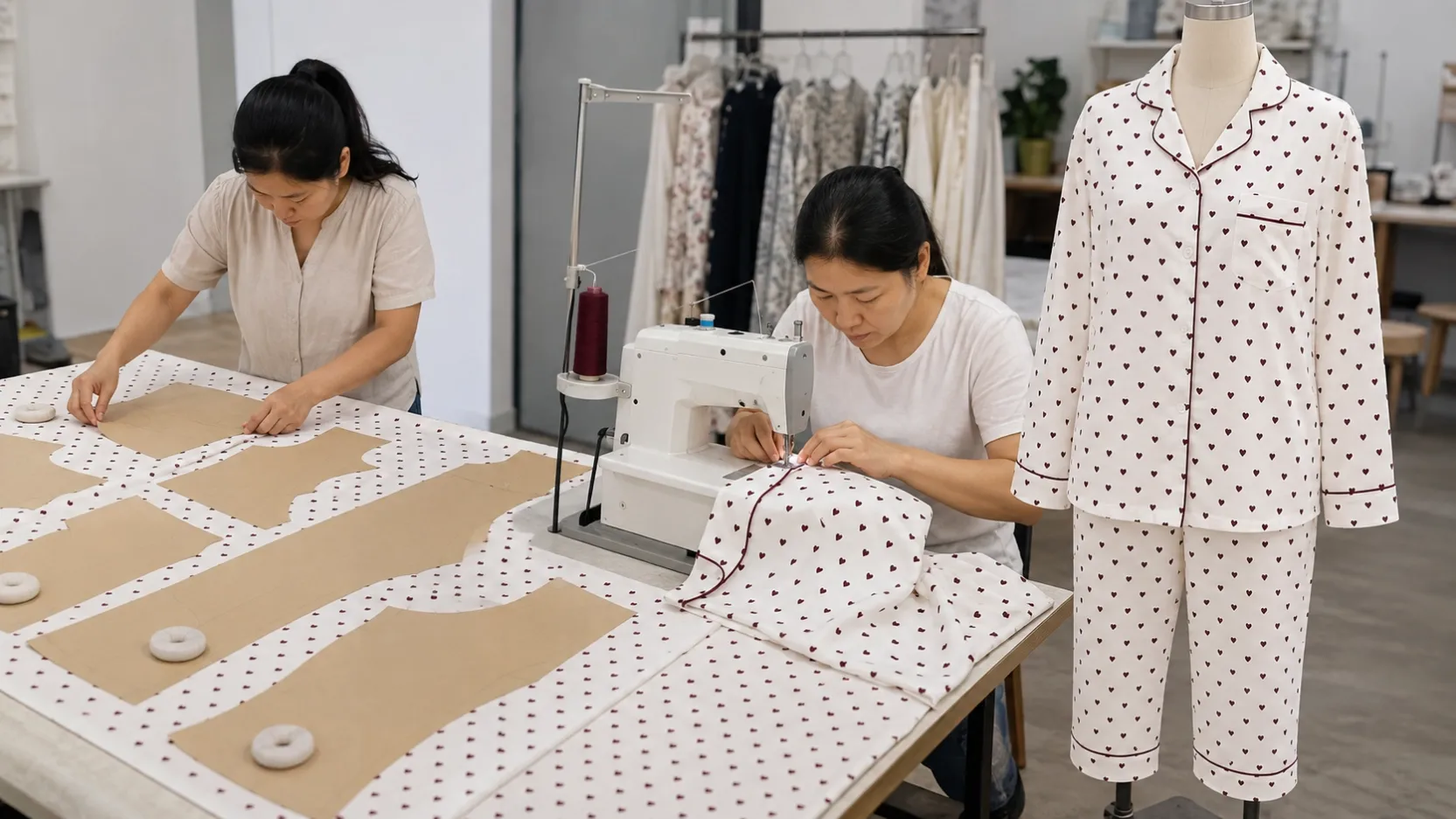
Custom cotton pajamas production works best when a buyer controls one linked path from the design brief through sample approval, bulk release, quality checks, and packaging. For distributors, brands, boutiques, wholesalers, Amazon sellers, importers, and hotel or spa buyers, the useful question is not simply whether a supplier can make cotton pajamas; it is whether the final order can be defined, quoted, approved, and checked against the same specification. This guide shows the decisions to lock before each stage.
Quick Answer for Buyers
- Start with a version-controlled brief that records the style, fabric direction, colour or print, size range, quantity by variant, labels, packaging, target market, and sample objective.
- Ask each supplier to restate the brief and identify the assumptions that affect materials, MOQ, sampling, quality checkpoints, and the quotation.
- Use a sample and approval log to connect the approved fabric, measurements, construction, artwork, labels, packing, and inspection points before bulk production is released.
- Treat destination-market, import, marketplace, testing, and labelling obligations as buyer-side verification tasks with appropriate qualified parties.
Turn the Cotton Pajama Design into a Controlled Brief
A sketch, mood board, or reference garment gives a supplier a direction, but it is not enough to control production. Create a written product brief for the set: top and bottom shape, collar, sleeve length, pocket, waistband, cuffs, seams, piping, buttons, print placement, and any contrast components. Record the cotton fabric direction, composition requirement if known, weight or hand-feel expectation, colour reference, size range, grading requirement, logo treatment, labels, hangtags, individual protection, carton plan, and target market.
Quantities should be broken down by style, colour, and size. A 1,000-set program in two colours with a narrow size range is a different project from 1,000 sets split across many colours, prints, and sizes. Give each candidate the same brief so that the Xinglaika Apparel home page and product range remain helpful context rather than a substitute for your order specification.
Define the Decisions Before Sampling
Sampling is the bridge between the creative direction and a production-ready order. Before requesting a sample, identify what the buyer must approve and what remains open. Material appearance, feel, shrinkage expectations, colour direction, print placement, fit, measurements, construction, stitching, buttons, elastic, labels, logo placement, individual packing, and carton marks should not be scattered across unrelated messages.
Decision area | Why it matters in production | What the buyer should document |
|---|---|---|
Style and construction | Seams, collars, pockets, cuffs, and closures affect the make | Technical reference, annotated details, and approved changes |
Cotton fabric direction | Fibre, weight, finish, colour, and print affect the final product | Fabric reference, composition requirement if known, and colour standard |
Size and quantity mix | Variant complexity affects planning and quotation assumptions | Units by style, colour, and size plus a grading reference |
Branding | Labels, artwork, hangtags, and placement need controlled files | Final artwork, text, position, dimensions, and approval owner |
Quality plan | A visible sample does not define all bulk checkpoints | Measurements, appearance criteria, packing checks, and deviation process |
Packaging | Individual packs and cartons affect cost, handling, and receiving | Bag, band, insert, carton assortment, marks, and destination instructions |
Name one buyer-side decision owner and keep a dated comments log. A comment such as “make it softer” may be useful early, but a bulk-release document should say which fabric reference, construction version, measurement chart, and label artwork have been accepted. Any later change to fabric, fit, print, trim, logo, label, or packing should be recorded as a new version and reviewed for its effect on the order.
Manufacturing Process with Xinglaika Apparel
Use this six-stage sequence to discuss controls with Xinglaika Apparel. It is a project-planning framework, not a promise of unverified capacity, certification, lead time, or compliance outcome. Confirm the exact application to your order in writing.
- Fabric selection: align the cotton fabric reference, composition direction, weight or hand feel, colour, print, and care expectations with the approved brief.
- Pattern development: translate the top, bottom, collar, sleeve, waistband, pocket, cuff, and size-chart requirements into controlled pattern and measurement information.
- Sample making: compare the sample with the fabric and trim references, construction notes, measurements, artwork, labels, and dated comments log.
- Quality inspection: agree order-specific checks for measurements, sewing, fabric appearance, print or logo placement, labels, individual packing, and carton information.
- Bulk production: maintain approved versions and resolve any material, construction, branding, or packing question before it becomes an uncontrolled production change.
- Packaging: confirm individual protection, inserts, carton assortment, shipping marks, and receiving requirements against the final packing plan.
The sequence helps both sides see whether the sample actually answers the buyer's release questions. It also gives a distributor a practical way to separate a quote from a production control plan.
Use the Sample to Test the Bulk Specification
An attractive sample can still leave bulk risks unresolved. Review the sample against a checklist: style proportions, fit, measurements and tolerances, fabric appearance and feel, colour or print direction, seam appearance, button or elastic construction, piping if used, logo placement, label wording, care information, individual protection, and the packing concept. State whether each item is approved, approved with listed corrections, or requires another review.
For a private-label order, send the supplier one complete release pack after the last approved changes. It should contain the final brief, measurement chart, fabric and trim references, artwork, labels, packaging instructions, inspection points, and a version number. The pajama product direction can help structure a style discussion, but only the approved release pack should govern the purchase order.
Compare Supplier Plans, Not Only Unit Prices
Comparable quotations begin with comparable input. Ask each supplier to restate the style, cotton fabric direction, colours or prints, quantity mix, sample route, branding, labels, individual packing, cartons, and trade assumptions. Then compare what is included, excluded, or awaiting confirmation. A lower initial figure may reflect a different fabric, reduced trim scope, an unpriced sample change, or an assumption about packaging.
Use the custom sleepwear supplier comparison guide to organise responses. If your assortment is still changing, the OEM versus ODM sleepwear guide can help clarify which development responsibility belongs in the brief before bulk approval.
Ask suppliers to clarify the information they still need instead of treating unspecified details as included. This protects both a buyer and a supplier from approving a price for a different program than the one that will enter production.
Build Quality and Packaging into the Release Decision
Quality control for cotton pajamas should be tied to the specific order. Agree which evidence or checkpoints matter: fabric appearance, colour or print consistency, measurements and tolerances, stitching, loose threads, seams, button attachment, elastic function, logo placement, label content, individual protection, carton quantities, and shipping marks. Decide who receives the findings, when an issue is raised, and how any agreed correction is recorded.
Packaging is part of the product program, not a final shipping detail. Specify the individual bag, band, insert, hangtag, size or colour identification, carton assortment, carton marks, and any receiving instructions. Importers, marketplace sellers, and other buyers should independently check destination-market and channel obligations with qualified parties. Supplier process information can support planning, but it does not replace buyer verification.
Why Choose Xinglaika Apparel
Xinglaika Apparel is a China OEM and ODM sleepwear and apparel manufacturer for global brands, boutiques, wholesalers, Amazon sellers, importers, distributors, and hotel or spa buyers. For a custom cotton pajama program, use the existing-site capability points below as a discussion framework and confirm their order-specific application in writing.
- 20+ years experience
- 100+ skilled workers
- OEM & ODM service
- Flexible MOQ
- Custom label
- Custom packaging
- Worldwide export
Review About Xinglaika Apparel alongside your own supplier diligence. Ask for project-specific confirmation of material options, sampling arrangements, production controls, quality checks, and any relevant documentation. These capability points are not a substitute for buyer-side verification.
FAQ
What information should I send before requesting custom cotton pajamas production?
Send the style reference, construction details, cotton fabric direction, colours or prints, size range, quantity by variant, logo and label requirements, packaging needs, target market, and sample objective. The supplier can then identify what needs confirmation before quoting the exact program.
How does a cotton pajama sample help with bulk production planning?
It gives the buyer a controlled item to review against the brief. Use it to approve or correct fit, measurements, construction, fabric appearance, print or logo placement, labels, and packing before releasing bulk production.
Should I approve fabric and packaging separately from the sample?
They should be connected to the same version-controlled approval pack. Record the fabric reference, trim direction, artwork, labels, individual pack, carton requirements, and inspection points so they can be checked against the final product specification.
How can a distributor compare cotton pajama supplier quotations fairly?
Give each supplier the same written brief and compare the stated scope: sample work, materials, trims, branding, labels, individual packing, cartons, inspection expectations, documentation requests, and trade terms. Resolve exclusions before comparing price.
What quality checks should be agreed before bulk release?
The correct checks depend on the order, but buyers commonly define measurements, sewing, fabric appearance, print or logo placement, labels, individual packing, carton quantities, and shipping marks. Agree how results and deviations will be reviewed.
Can private-label cotton pajamas include custom labels and packaging?
Yes, plan them in the same product brief. Provide the artwork, wording, placement, dimensions, packing components, carton marks, and buyer-side approval path so the supplier can review the precise scope.
Request a Custom Cotton Pajama Quote
Looking for a custom cotton pajamas production partner for an OEM or private-label program? Contact Xinglaika Apparel with your design, quantity by variant, target market, cotton fabric preference, size range, branding files, and packaging requirements. We can use your brief to clarify sample, quotation, and production-planning steps for your order.