Aug 7, 2026Buying Guides
Private Label Lace Nightdress Manufacturing FAQ for B2B Buyers
Evaluate a private label lace nightdress manufacturer with practical questions on samples, materials, fit, QC, labels, packaging, and bulk orders.
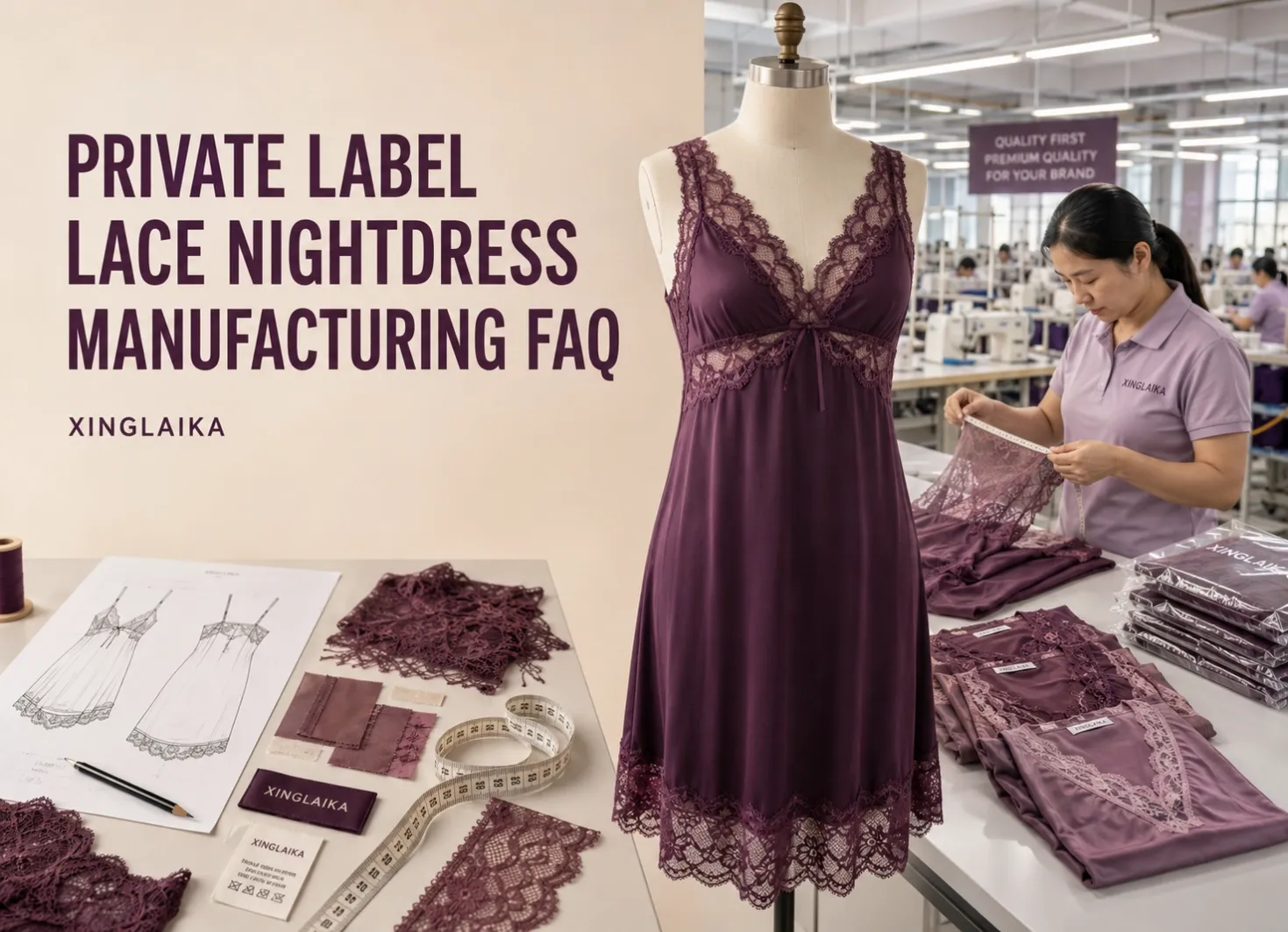
A private label lace nightdress manufacturer should help a B2B buyer turn a design concept into an approved, repeatable specification before bulk production. For Amazon sellers, brands, boutiques, wholesalers, importers, and distributors, the practical decision is whether the supplier can clarify materials, fit, lace construction, branding, inspection, and packaging for the actual order. This FAQ explains the questions to ask before comparing quotations or approving a sample.
Quick Answer for Buyers
- Send the same written brief to each supplier: design reference, fabric direction, lace placement, size chart, colourways, quantity, label artwork, packaging, target market, and required date.
- Compare like for like. A lower figure is not comparable when fabric composition, lining, trim, sample count, inspection, or packing scope differs.
- Approve a controlled sample package before bulk release: production sample, measurement chart, material and trim references, label files, packaging instructions, and inspection points.
- Treat marketplace, product-safety, labelling, packaging, customs, and importer requirements as buyer validation tasks. Confirm the applicable rules with qualified parties rather than treating a supplier statement as a legal conclusion.
What Should I Give a Private Label Lace Nightdress Manufacturer?
Give the manufacturer a sourcing brief that makes each commercial and product decision visible. Include an original sketch or a reference you are permitted to use; a front and back view; target retail position; fabric composition or hand-feel direction; lace type and placement; lining or opacity expectation; colour standard; measurement chart; size range; quantity by colour and size; branding files; packaging concept; target market; and desired delivery window. Mark uncertain points as questions for sampling rather than leaving them unstated.
Amazon sellers should also add the current listing, barcode, variation, preparation, and pack-presentation requirements they must meet. Wholesalers should state assortment and carton logic. Boutique buyers should clarify whether they need a seasonal capsule, replenishment potential, or an exclusive treatment. Start with the Xinglaika Apparel home page and the product range to frame a relevant inquiry, but ask for order-specific confirmation rather than assuming a catalog item is a ready-made match.
Brief item | Why it changes the quote | Buyer question |
|---|---|---|
Fabric and lining | It affects hand feel, opacity, cost, care, and repeatability | What composition, weight, and lining are required? |
Lace and trims | It affects construction, availability, and defect risk | Which lace reference, width, colour, and attachment method apply? |
Fit and grading | It controls returns risk and sample revisions | Which measurement points and tolerances govern approval? |
Branding | It controls labels, hangtags, and pack artwork | Which artwork, languages, and placement files are ready? |
Quantity | It affects material booking, MOQ, and cartons | What is the quantity by colour, size, and pack assortment? |
Target market | It affects validation and documentation questions | Which channel and destination requirements must the buyer check? |
How Do I Evaluate Lace, Fabric, and Construction?
Do not approve from a styled image alone. Ask the supplier to identify the fabric composition, weight, stretch direction, lining, lace construction, elastic, seam finish, and care implications in the sample record. Review the sample under appropriate lighting for transparency, lace edge behaviour, stitch consistency, seam comfort, symmetry, colour transfer risk, and visible finishing. Compare measurements with the approved chart, including length, bust, waist, strap or sleeve points, and the agreed tolerances.
Use approved real swatches and sample photos in the order file. The nightdress collection can support a product discussion, while the Women Plush Nightdress OEM Manufacturer page shows one product-page format. Neither page proves that a particular lace, fabric, certification, capacity, or deadline applies to your project. Ask for a written response tied to your own specification.
What Is the Sample and Manufacturing Process?
For a custom lace nightdress, the safest workflow is a sequence of approvals rather than a verbal promise. Xinglaika Apparel presents an OEM/ODM process; buyers can use these six stages as a control framework and confirm the applicable details in writing.
- Fabric selection. Align fabric composition, weight, colour, opacity, lace, elastic, and lining with the brief. Identify the approved swatch or sample reference.
- Pattern development. Convert the silhouette and measurement chart into a pattern and grading plan. Confirm fit comments, size range, and tolerances.
- Sample making. Review construction, lace attachment, fit, label placement, and pack concept. Log revisions by version before approving a production sample.
- Quality inspection. Define checkpoints for measurements, sewing, stains, lace edges, trim attachment, labels, and packing condition. Agree who receives findings and how corrections are handled.
- Bulk production. Release bulk only after the specification package is complete. Ask for project milestones and escalation contacts rather than relying on assumed timing.
- Packaging. Approve folding, bags, inserts, hangtags, size stickers, carton marks, carton quantities, and destination instructions before shipment.
How Should Buyers Compare Supplier Quotations?
Request every candidate to answer the same brief. Compare what is included, excluded, assumed, or subject to sample approval. A price can only be evaluated when the fabric, lace, lining, quantity, colour count, labels, packaging, sample route, inspection scope, shipment term, and timeline assumptions are visible. Keep the comparison in a written decision record so later changes do not silently alter the order scope.
Decision area | Evidence to request | Warning sign |
|---|---|---|
Brief understanding | Written restatement of materials, sizes, branding, quantity, and packing | Important details are replaced by generic wording |
Sample route | Sample version, measurement points, and approval owner | No controlled version or approval record |
Material control | Composition and approved swatch/sample reference | Material is described only by a trade name |
Quality control | Inspection checklist and corrective-action path | “Strict QC” without checkpoints or records |
Packaging | Artwork, pack-out, and carton assumptions | Labels and carton marks are deferred until shipment |
Communication | Named contacts and a decision log | Questions and changes are not documented |
The guide to comparing custom sleepwear suppliers gives a wider supplier-evaluation framework. Use it alongside your own commercial, product, legal, and logistics review.
What Should Be Checked for Amazon and Other Sales Channels?
Marketplace rules, labelling duties, packaging obligations, product-safety expectations, and import documentation depend on the product, destination, sales channel, and importer role. Put responsibility beside each requirement: who identifies it, who supplies a sample or document, who approves it, and where the approved version is stored. Verify current channel rules directly with the marketplace and obtain appropriate professional advice for destination-specific obligations.
Do not represent a supplier's general marketing statement as certification or legal proof. Instead, ask whether the supplier can support the documents, sample changes, label information, or packaging specifications your verified requirements call for. This evidence-led approach prevents a supplier quotation from being mistaken for a compliance conclusion.
Why Choose Xinglaika Apparel
Xinglaika Apparel positions itself as a China OEM and ODM sleepwear and apparel manufacturer for global brands, boutiques, wholesalers, Amazon sellers, importers, and distributors. Its About Us page presents 20+ years of experience, 100+ skilled workers, OEM & ODM service, flexible MOQ, custom labels, custom packaging, and worldwide export. Use these stated capabilities as a starting point for a buyer conversation, then confirm the precise scope, sample plan, quality checkpoints, order quantity, timeline, and destination fit for your lace nightdress project.
How Do Labels and Packaging Fit Into the Order?
Labels and packaging are product requirements, not end-of-order decorations. Approve the care-label content, fibre information, size mark, brand label, hangtag, polybag or other individual pack, inserts, folded presentation, barcode position where relevant, carton marks, and carton assortment before bulk release. The buyer should validate destination and channel requirements; the supplier should work from the approved files and packing instructions.
Keep artwork versions, approvals, and changes together with the sample record. This reduces the chance that a correct garment is delayed by an unfinished insert, mismatched size sticker, or unconfirmed carton mark.
FAQ
What is the first question to ask a lace nightdress manufacturer?
Ask whether the supplier can quote against your complete brief and identify any assumptions. The answer should cover materials, lace, fit, sample route, branding, packaging, quantity, and open decisions rather than only a unit price.
Can I use a competitor product photo as my specification?
Use only references you are permitted to use and do not ask a supplier to copy protected designs. Convert the desired features into your own sketch, measurement chart, material direction, and construction notes so the quotation and sample can be evaluated responsibly.
How many samples should I approve before bulk production?
The answer depends on the design risk and changes required. At minimum, keep a controlled production-sample approval record. If fabric, lace, fit, branding, or packaging changes materially, review the affected sample or component again before releasing bulk.
How can an Amazon seller reduce returns risk?
Align the fit, measurement chart, material description, care information, images, labels, and pack presentation before production. Validate current marketplace requirements directly and retain the approved specifications and inspection criteria.
Does flexible MOQ mean every order quantity is available?
No. MOQ depends on the style, fabric, lace, colours, sizes, labels, packaging, and material availability. Ask for an order-specific MOQ and clearly state the quantity by variant before treating it as confirmed.
What information should I send when requesting a quote?
Send your design or permitted references, target quantity, target market, fabric preference, size range, colours, label artwork, packaging requirements, sample expectations, and desired delivery window. Use the contact page when your brief is ready.
Request a Custom Quote
Looking for a private label lace nightdress manufacturer for a B2B project? Contact Xinglaika Apparel with your design, target quantity, target market, fabric preference, size range, lace and lining requirements, label files, packaging requirements, and inspection expectations. We can then clarify the sample route and the order-specific information needed for a responsible quotation.